You're the Inspiration

A few weeks ago, a friend sent me a DM on Instagram and called me inspirational. It was a lovely thing to say, and it was clearly intended as encouragement. The problem is that instead of feeling inspired by being called inspirational, I immediately became suspicious.
What exactly does that mean?
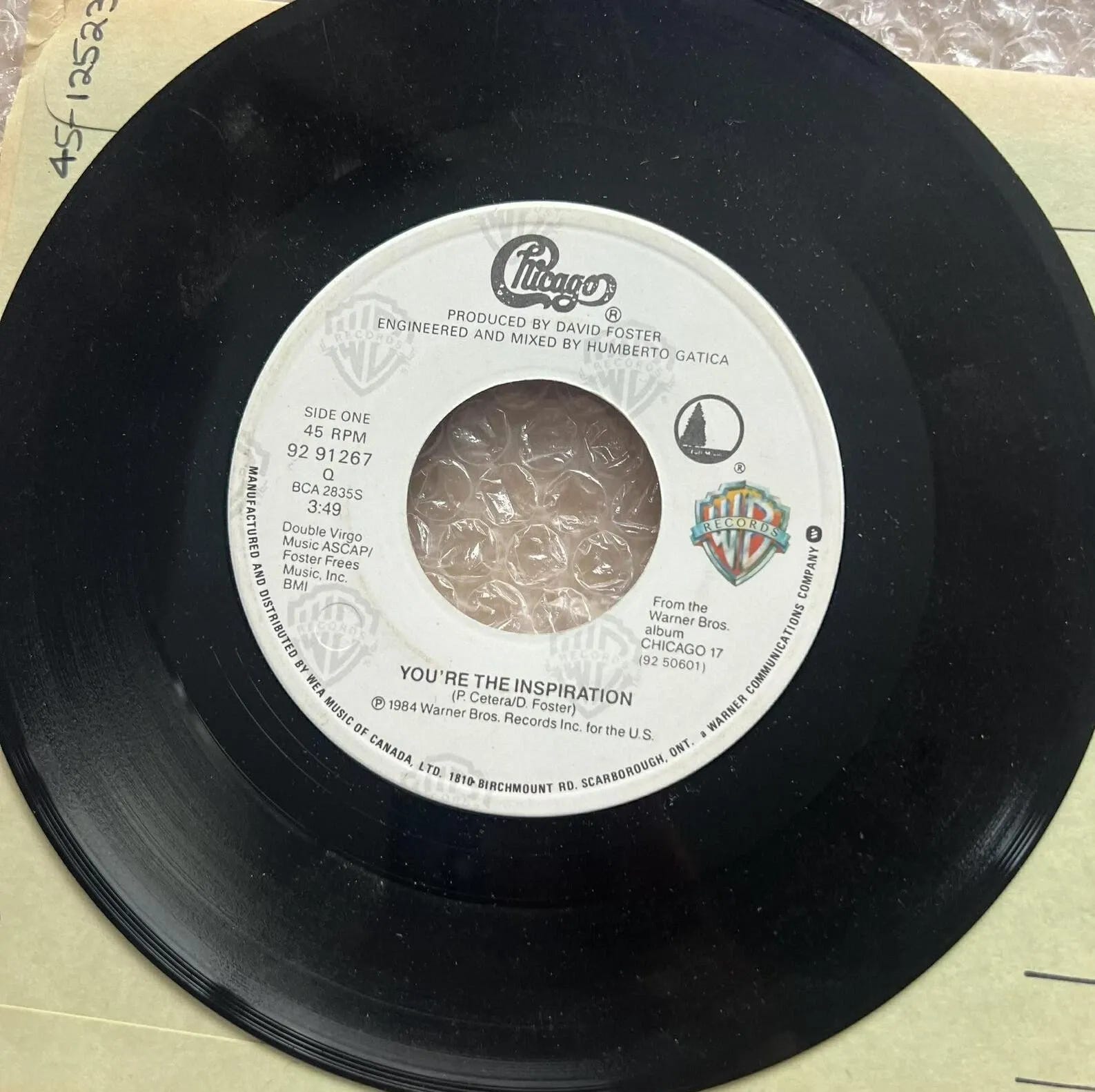
At roughly the same time, I found myself listening to You’re the Inspiration by the band Chicago. For younger readers, Chicago was a wildly successful band that spent the 1970s and 1980s proving that nearly any emotional situation could be improved by adding a horn section.
The song raised a question.
What exactly is inspiration?
Because if we’re being honest, we’ve turned the word into the emotional equivalent of duct tape. We use it for everything.
A teacher who spends thirty years in the classroom is inspirational.
A cancer survivor is inspirational.
A military veteran is inspirational.
A single parent working three jobs is inspirational.
A person who successfully navigates a customer service phone tree without suffering a complete psychological breakdown is, frankly, inspirational.
The word has become so broad that I’m no longer convinced any of us know what it means.
And yet we keep using it.
Particularly when discussing people who have survived something difficult.
That’s where my skepticism begins.
The more I think about it, the more convinced I become that nobody has ever looked inspirational while they were actively living through the thing that would later make them inspirational.
Real struggle rarely looks heroic.
Most of the time it looks exhausted.
It looks overwhelmed.
It looks confused.
Occasionally, it looks like a person standing in their kitchen wondering why they walked into the room in the first place.
Take Abraham Lincoln.
Today, Lincoln is remembered as one of the greatest presidents in American history. He appears on monuments, currency, and enough motivational posters to wallpaper an entire school district. History remembers the wisdom, the courage, and the leadership. History tends to skip over the fact that the man spent the Civil War trying to hold a fractured nation together while carrying unimaginable grief and responsibility. If you had met Lincoln in 1863, I doubt your first thought would have been, “What an inspiration.”
More likely, you would have thought, “This man appears to be one administrative email away from complete collapse.”
The same thing happened to Thomas Edison.
History remembers the light bulb. History does not remember the years of failure that preceded it. It doesn’t remember a man standing in a workshop surrounded by enough failed experiments to make any reasonable observer question whether he had become trapped in an unhealthy relationship with glass.
Imagine being Edison’s neighbor.
Nobody was leaning over the fence whispering, “We are witnessing greatness.”
They were probably saying, “Thomas is yelling at light bulbs again.”
That’s the strange thing about inspiration.
It always seems to arrive after the fact.
Once enough time has passed, the rough edges are sanded down. The fear disappears. The confusion disappears. The panic disappears. The story is cleaned up, edited, and presented as evidence of resilience.
What gets removed are all the inconvenient human parts.
Nobody wants to hear about the uncertainty.
Nobody wants to hear about the self doubt.
Nobody wants to hear about the moments when you had absolutely no idea what you were doing.
Those details don’t fit neatly on motivational posters.
And motivational posters are an important part of the Inspirational Industrial Complex.
Somewhere, at this very moment, a corporate conference room contains a framed photograph of a mountain accompanied by a quote about perseverance. Nobody knows what it means, but it has somehow survived six reorganizations and three vice presidents.
This is how inspiration often works.
We take a complicated human experience, remove all evidence of confusion, terror, grief, anger, and uncertainty, then present the remaining fragments as a life lesson.
A person survives something awful.
A few years pass.
Then suddenly they’re expected to deliver a keynote TED talk speech.
Meanwhile, they’re still trying to remember where they put their car keys.
Perhaps that’s why I’ve always had a complicated relationship with the word inspirational.
The audience sees the finished puzzle.
The person living it is still looking for pieces.
The audience sees courage.
The person living it remembers making decisions with incomplete information and a level of anxiety that should qualify as cardiovascular exercise.
The audience sees resilience.
The person living it remembers simply having no acceptable alternative.
Maybe that’s the misunderstanding.
Maybe inspiration isn’t courage.
Maybe it isn’t wisdom.
Maybe it isn’t triumph.
Maybe inspiration is simply what struggle looks like from a safe distance.
Close enough to admire.
Far enough away to miss the cost.
Perhaps that’s what we’ve been doing all along.
Calling people inspirational when what we’re really seeing is the visible portion of a bill we never had to pay.
We see the outcome.
We miss the invoice.
Because the truth is that most survival isn’t cinematic.
Nobody is standing on a mountaintop while an orchestra swells in the background.
Most survival is painfully ordinary.
It’s returning the phone call.
Paying the bill.
Showing up to the appointment.
Having the difficult conversation.
Doing the next thing that needs to be done even when every cell in your body votes against it.
There is no soundtrack.
No standing ovation.
No dramatic revelation.
Just another human being carrying a weight that nobody else can fully see.
Maybe that’s what inspiration actually is.
Not perfection.
Not wisdom.
Not some magical ability to transform suffering into a motivational poster and a bestselling memoir.
Maybe inspiration is simply witnessing another imperfect human being continue.
Not because they’re fearless.
Not because they’re enlightened.
Not because they’ve discovered some profound secret hidden inside adversity.
But because life knocked them flat and, for reasons they can’t entirely explain, they got back up anyway.
After all this thinking, I’m still not entirely sure what inspiration is.
I know what it isn’t.
It isn’t perfection.
It isn’t certainty.
It isn’t a carefully curated highlight reel.
Perhaps Chicago had it wrong all along.
Or perhaps they accidentally stumbled onto something true.
Maybe inspiration isn’t the person standing on stage after everything worked out.
Maybe it’s the person still in the middle of the mess.
The person who hasn’t figured it out.
The person carrying on anyway.
The person who doesn’t feel inspirational at all.
If that’s true, then we’re surrounded by inspiration every day.
We just keep mistaking it for ordinary people.
The audience calls it inspiration.
The person living it usually calls it Tuesday.
“Maybe inspiration is simply what struggle looks like from a safe distance.”
This is exactly it. 👏👏👏
“Maybe inspiration isn’t the person standing on stage after everything worked out.
Maybe it’s the person still in the middle of the mess.”
This feels right. The people that I find inspirational are the ones who keep showing up as life continues to beat them down. I see inspiration during and in the struggle!!!